
Using Games to Frame a Process for Civic Engagement

Wednesday, June 12th, 2013

By Christina Crawley

We were recently very lucky to catch Eric Gordon, the Founding Director of the Engagement Game Lab at Emerson College in Boston, for a special Brown-Bag Lunch (BBL) on "Games and Citizen Participation" while he was here in Washington DC. Supported by the John S. and James L. Knight Foundation and the MacArthur Foundation, Eric and his colleagues at the Engagement Game Lab spend their time finding ways to turn “one-off” citizen participation into continued engagement and civic learning. And how do they do this? They make games!

According to Eric, “there is often a lack of objectives as to why we want people to participate – or these objectives are simply not known or communicated. People talk about ‘engaging the community’ but that’s not really what’s happening. Data is being extracted, but there is little thinking about how the groups and participants are affected.” Basically, many means of acquiring civic engagement are simply for the sake of it.

CommunityPlanIt, the Lab's game that's gotten the most traction so far, is a municipal-level game that uses civic participation for local planning, from school planning to city-wide master planning which has had good participation rates from Detroit to Boston. Check out the Community PlanIt Video (above). 

Through trial and error, from games that never scaled to games that got a good amount of participation, some interesting observations about civic engagement from the games that Eric and his colleagues have developed include:

  • People often don’t trust those who are running the game, especially if it’s the government.
  • People put a great deal of trust into other players and the opinions of other players is often more important than the content of the game.
  • Young people (i.e., non-voters) and adults rarely engage with one another, however, they seem to like the fact that the other is there.
  • Games are perceived differently from one country to the next (e.g., the United States vs Sweden) because systems of privacy and government are simply different.

It was really great having Eric over – and we look forward to hearing how the Engagement Game Lab develops. OpenGov gaming certainly sounds good to me!

OpenGov Hub Gets Kudos from the Omidyar Network

Thursday, June 6th, 2013

Global Integrity, the co-founder of the OpenGov Hub, was recently awarded as the runner-up of the annual Omidyar Network Award for its outstanding work in the government transparency space. Included in Global Integrity's efforts which got it the prize, was the creation of the OpenGov Hub in 2012. 

From a blog post by Nathaniel Heller on the award: 

In giving out the award founder Pierre Omidyar cited Global Integrity, "for the leading role they've played in catalyzing and convening the government transparency and accountability community through a combination of innovative programmatic efforts and the world’s first government transparency and accountability thematic co-working space, the OpenGov Hub in DC."
While much of our work these days is indeed focused on spurring greater risk taking and experimentation across the government transparency and accountability (see our Innovation Fund and Indaba as concrete examples), the recognition of the OpenGov Hub as another tool in the catalytic toolbox was particularly validating. We're not even a year into the hub experiment but are already witnessing real innovation and experimentation emerging from a simple but powerful approach: if you put smart people in the same room, good things are likely to happen.

We are truly honored to be mentioned and recognized within Global Integrity's amazing efforts. Congratulations all round!

Akvo Track Day – Washington DC edition

Thursday, May 30th, 2013

By Emily Armanetti

The inaugural Washington, D.C. Akvo Track Day took place last week at theOpenGovHub, where our U.S. hub is based. After a brief speed dating exercise to warm up the group, we kicked off with an update from Akvo FLOW product manager Caetie Ofiesh on new developments from around Akvo. Caetie’s presentation spanned the latest on Akvo Openaid, Akvopedia, RSR and FLOW. We had quite a few questions from the group on how it all works, so it seemed to be a good basis on which to start the conversation with partners who may not be as familiar with what we do as yet.

Following our update, we were keen to give the floor to our partners. Akvo Track Days are as much about hearing from partners as they are about sharing information with them.

First, we welcomed Ben Mann of the University of North Carolina Water Institute, who talked about how the Millennium Water Alliance is using Akvo FLOW and RSR across six partner organisations in five countries in Latin America. Ben’s presentation covered the processes of training and using tools across teams, but also covered key learnings and challenges that the MWA-LAP has identified, having used FLOW for baseline surveys and water point mapping and RSR to allow donors to see things as they are happening. This was a great live case study to really breathe life into the how-it-all-works discussion. Here, Ben gives us a summary of his presentation.

Next up was John Sauer from Water For People, who led a dynamic discussion on water and open data. Ben Mann has captured the highlights of the session on his blog The Water Wonk. We were also able to get John’s view on how the session went.

For additional interviews with attendees, check out our playlist on Akvo.tv. Ideally, we’ll get post-event feedback from all of our attendees about the value they see in participating in similar events. On our part, we thought it was really useful to get a mix of our partners together in one room and, by the end of the day, we found ourselves discussing what types of events we can potentially host in the future.

For details on the Akvo Track Day events in Amsterdam and Nairobi, see the Akvo website.

Emily Armanetti is communications manager at Akvo, based in New York City. This blog post originally appeared on the Akvo website here.

Upcoming events in June

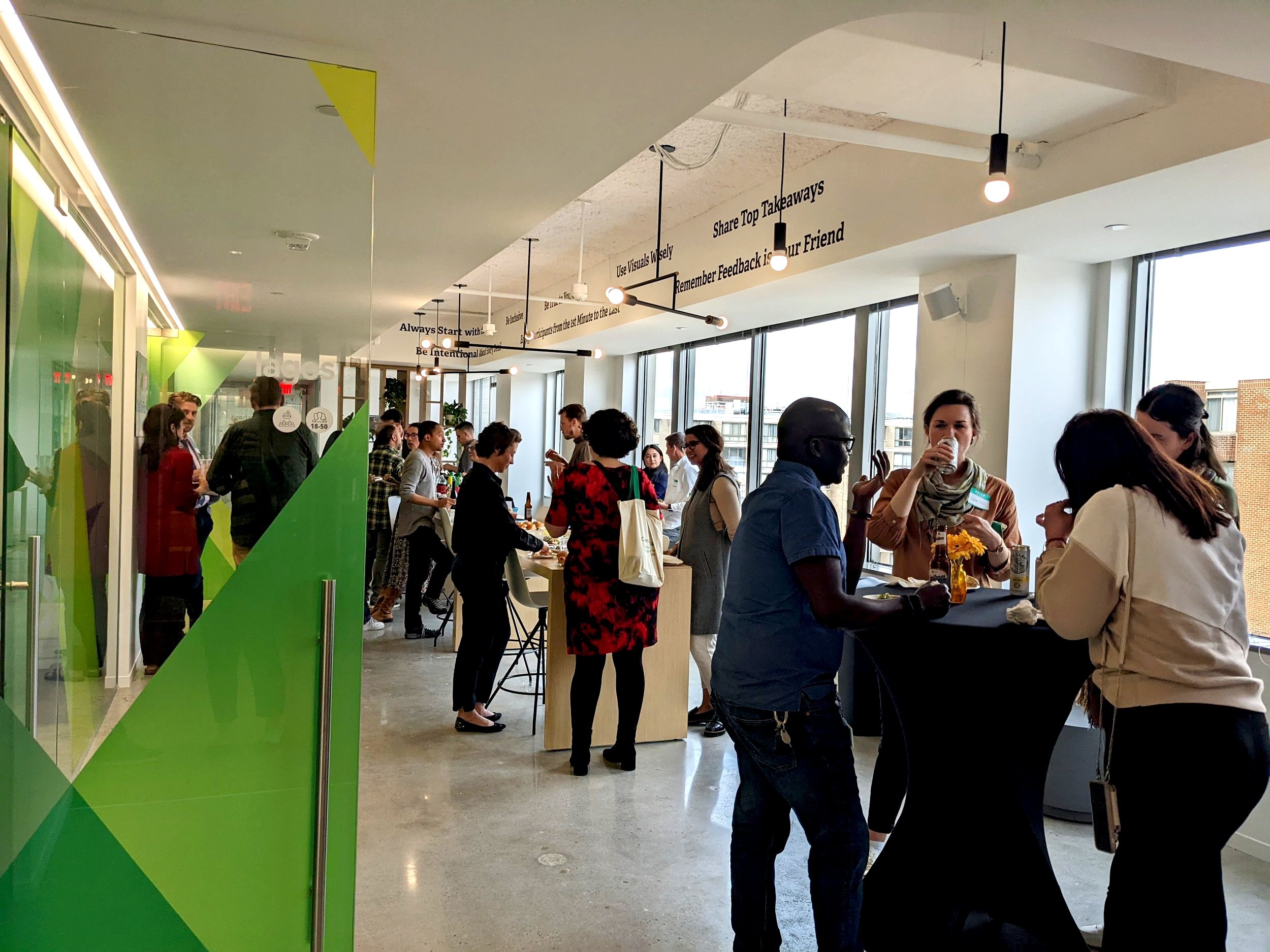
The events just keep on coming! If you'd like to stop by the OpenGov Hub over the next month, keep a few keys events in mind. And also to keep in mind: the below list is definitely going to grow, so stay tuned for more events in June.

  • Thursday, May 30th, 11am - 12pm: Gamification for Citizen Participation with Eric Gordon, the Director of the Engagement Game Lab (www.engagementgamelab.org) at Emerson College. If interested, email us at info@opengovhub.org.
  • Thursday, May 30th, 6.30-8pm:  How Behavioral Economics can Help Low Income People Save for the Future with Action Design DC. If interested, register here.
  • Thursday, June 13th, 12.30-2pm: Citizens Against Corruption – Report from the Frontline  with the Partnership for Transparency Fund. If interested, register here.
  • Friday, June 14th, 12.30-2pm: FailForward with Ashley Good, CEO and Founder of the Toronto-based organization. If interested, register here.

And remember, come back to our site soon for more updates, or follow our latest updates on OpenGov Hub's Twitter Feed.

p.s. on Tuesday, July 2nd, 6-8pm, we're having a Game Night on Civic Engagement (more info coming soon!). 

A Conversation on the “Fix Rate” with Integrity Action

Tuesday, May 21st, 2013

By Christina Crawley

Last week, we were lucky enough to catch Integrity Action’s CEO, Fredrik Galtung, while he was in Washington and have him run a special Brown-Bag Lunch (BBL) on his newly published report The Fix Rate: A Key Metric for Transparency and Accountability.

Through the use of “Community Integrity Building”, Fredrik discussed the importance of bringing citizen and public officials together as a key element of the fix rate which, “measure[s] the incidence with which transparency and accountability-related problems are resolved to the satisfaction of key stakeholders.” As Fredrik pointed out, the ability to close the loop between groups is what is at the core of a lot of transparency issues; it’s the connection that matters, as outlined in the reports various examples of ways in which communities have come together – in often very different ways – to build their communities.

As an integral part of the approach, there are Five Phases in Integrity Action’s Community Integrity Building Approach:

To learn more about the full approach, have a look at Integrity Actions full report The Fix Rate: A Key Metric for Transparency and Accountability now available online.